FURNACE REPAIR
Furnace Not Heating
When the thermostat calls for heat but the house stays cold, the fault may involve ignition, power, controls, or the safety circuit.
Explore this repair
A furnace that won’t heat needs a clear diagnosis. Find furnace repair information for your city in Illinois, understand common faults, and prepare to discuss the problem with a service professional.
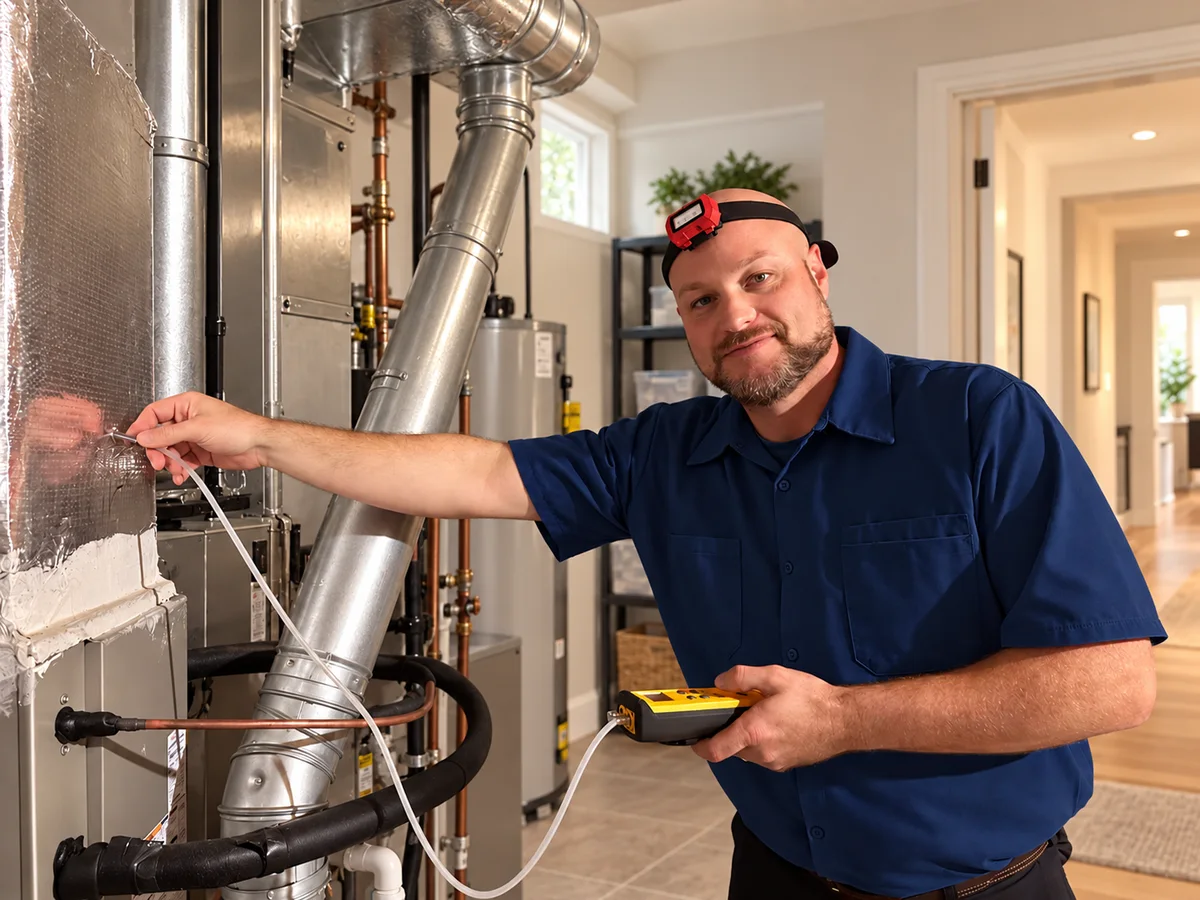
Help for a furnace that won’t heat.
Repair support for gas & electric.
Know what happens next.
ONE SERVICE. THE RIGHT FOCUS.
From the first sign of trouble to a clearer repair plan, start with the problem you’re noticing.
When the thermostat calls for heat but the house stays cold, the fault may involve ignition, power, controls, or the safety circuit.
Explore this repairA failed igniter, dirty flame sensor, or interrupted ignition sequence can leave a gas furnace unable to establish a steady flame.
Explore this repairWeak airflow, a fan that won’t run, or a blower that keeps running may point to a motor, capacitor, control, or airflow restriction.
Explore this repairA furnace that starts and stops frequently needs a check of airflow, thermostat operation, temperature limits, and control signals.
Explore this repairUnresponsive controls and inaccurate temperatures can interrupt heating even when the furnace itself still has working components.
Explore this repairNew rattling, scraping, or squealing can indicate a loose component or worn moving part. Describe when the sound begins.
Explore this repair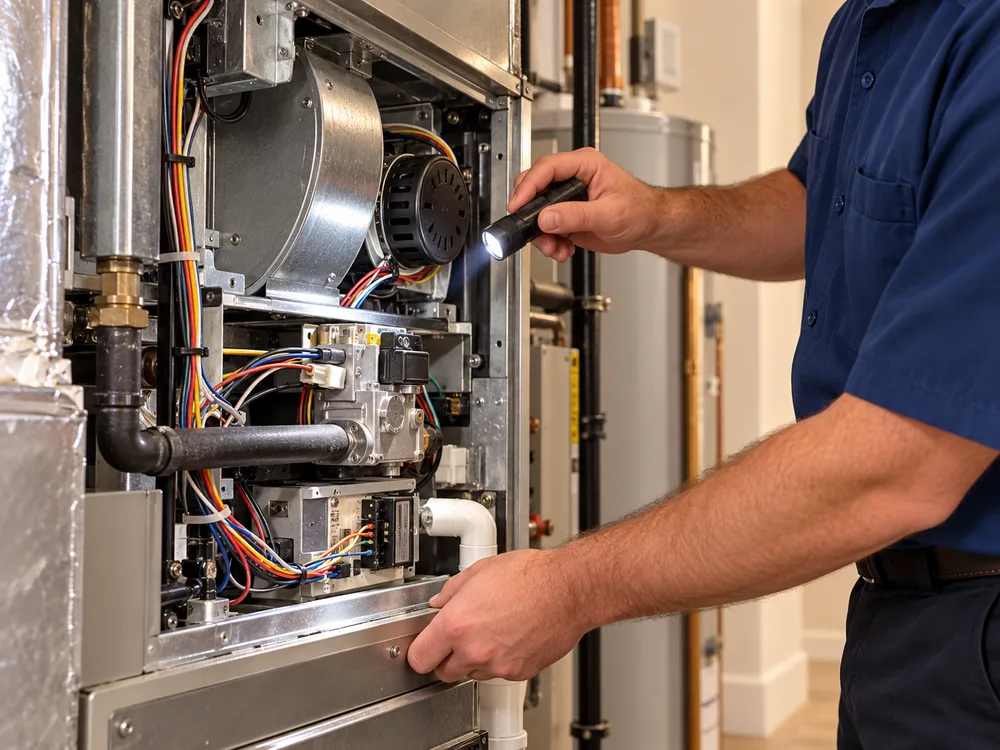
WHO WE ARE
A furnace problem can disrupt the whole day. Get Furnace Fixed helps homeowners understand common heating faults and find the right next step for furnace repair.
Our focus stays on the furnace: what’s going wrong, what a professional should inspect, and which questions to ask before authorizing work. Gas or electric, a clear diagnosis comes first.
YOUR QUESTIONS, ANSWERED
Know what to check, what to ask, and what comes next.
Possible causes include an ignition fault, a flame-sensing problem, an airflow restriction, or a thermostat/control issue. The exact cause needs diagnosis; the same symptom can come from different components.
Check that the thermostat is set to heat and above the room temperature. Look for a blocked or very dirty filter, check that vents are open, and note any displayed error code. Do not open gas fittings or bypass safety switches.
Many faults in either type can be repaired, depending on the failed component, system condition, and availability of the correct parts. A service professional should assess the specific furnace.
The fault, replacement parts, diagnostic charge, labor, access, and appointment timing can affect the price. Ask for the diagnostic fee first and an itemized repair estimate before authorizing work.
Your city and ZIP code, furnace make and model if accessible, whether it is gas or electric, the symptoms, and any fault code are useful. Mention recent changes or previous repairs.
No. Appointment availability and job suitability must be confirmed with the participating provider. A location page is not a booking confirmation.
A BETTER REPAIR EXPERIENCE
Use these priorities to guide your conversation with a furnace repair professional.
“What is causing the problem, and how did you confirm it?”
A QUESTION WORTH ASKING“What does the estimate include, and are there any other charges?”
A QUESTION WORTH ASKING“How will you verify the repair, and what warranty applies?”
A QUESTION WORTH ASKINGPUBLISHED CITY GUIDES
These city pages include local heating-season, population, ZIP-code, and nearby-city context.
EXPLORE ILLINOIS
Choose a city to see its furnace repair page.
Showing 1–67 of 67 cities beginning with G
Start with the symptoms. Get clarity on your next step toward a warmer home.
Call (844) 985-4255